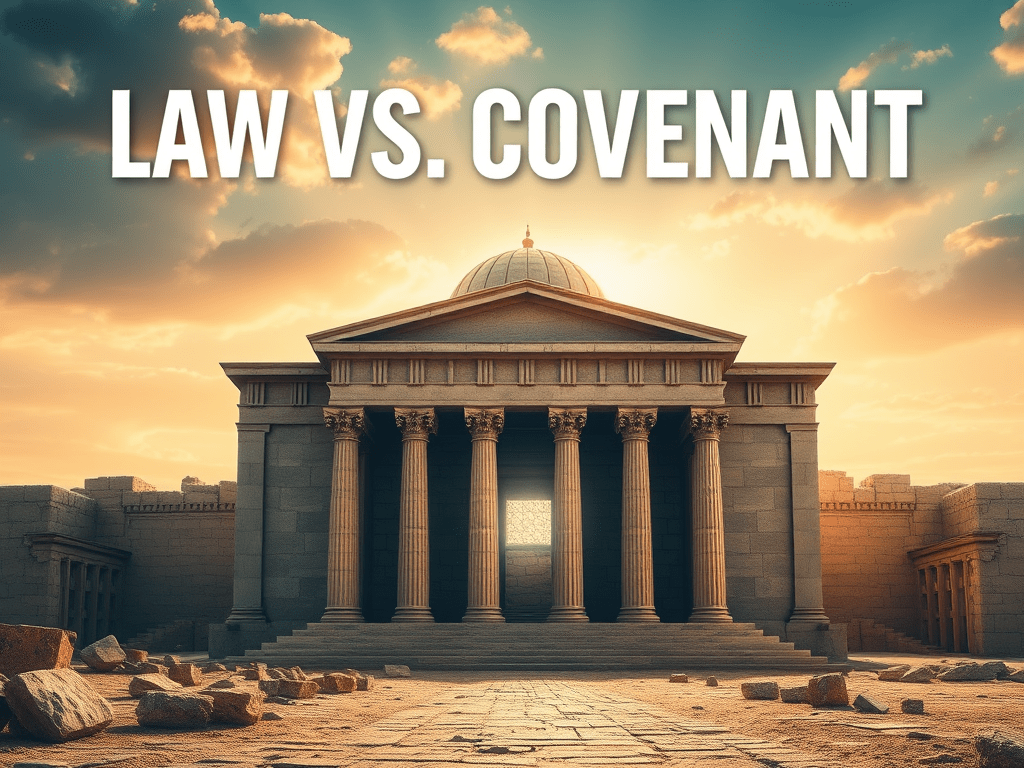
How Structure Becomes Identity in History and in the Self (2000–1000 BCE / Ages 20–30)
If the Age of the Sign (3000–2000 BCE) introduced permanence into the world, the Age of the Law (2000–1000 BCE) introduced obligation. The earliest legal codes of Mesopotamia carved order into stone so that society could survive beyond the fragility of memory. Law told the world how it ought to be, fixing behavior into patterns that transcended individual intention. For the first time, human consciousness lived within an objective structure — a framework that judged action even when no one watched.
But structure alone is not destiny. A society governed only by rules cannot yet imagine its own story. Law can restrain, but it cannot inspire; it can organize, but it cannot orient. And so as the second millennium BCE progressed, a new question emerged in the ancient Near East: What holds a people together when rules are not enough? Out of that question, the next age of the macrocosm was born — the Age of the Covenant.
**The Rise of Covenant (1000 BCE → 0):
When Law Gains a Center**
The transition from Law to Covenant reaches its symbolic climax around 1000 BCE, with the construction of Solomon’s Temple in Jerusalem. The temple is not merely an architectural project; it is the transformation of structure into identity. Its inner sanctuary — the Holy of Holies — housed not a deity carved in stone but the Ark of the Covenant, a chest containing the law-tables themselves.
This gesture is profound:
- The law does not disappear.
- It is gathered, centralized, and given narrative meaning.
Where the law once stood alone, the temple makes it the heart of a people’s story. Order becomes vocation. Obligation becomes relationship. Rule becomes binding promise.
This is why the Judaic tradition stands uniquely at the center of this transition. Unlike the cosmological religions of Egypt or the legal empires of Babylon, Israel came to understand its existence not merely as political survival but as participation in a historical drama — one defined by calling, wandering, failure, return, and fulfillment. The covenant created not only rules but a direction for history.
For the first time, a civilization conceived its identity narratively: as a story unfolding across generations, anchored by a promise transcending any single moment.
**The Psychological Parallel:
Ages 20–30 — When Law Turns Into Purpose** The same transformation appears in the microcosm.
If the second decade of life (10–20) corresponds to the Age of the Law — when the self becomes aware of boundaries, obedience, and transgression — then young adulthood (20–30) corresponds to the Age of the Covenant.
This is the age when rules no longer suffice. A person begins to ask not only what is required of me, but what am I for? It is the decade when life requires direction:
- commitments deepen
- professions are chosen
- relationships gain weight
- values are tested against experience
- the first personal “temple” — a center of meaning — begins to form
Here too the law does not vanish; it becomes internalized.
External obligation transforms into inner purpose.
What once constrained from the outside now guides from within.
The psychological drama mirrors the historical drama:
- Law creates order
- Covenant creates identity
- Law restricts
- Covenant directs
- Law defines behavior
- Covenant defines belonging
Why the Temple Is the Symbol of the Age
In the macrocosm, the temple is the architectural expression of an inner truth: a people becomes a subject when its law becomes its center. In the microcosm, early adulthood mirrors the same process: a person becomes an agent when obligations crystallize into a purpose worth pursuing.
This is why the Law → Covenant transition is the first rise in the long arc of human consciousness. It marks the moment when:
- structure becomes story
- rule becomes relationship
- obligation becomes calling
- identity becomes historical
The world begins to move not merely by necessity but by promise.
The Arc Is Rising
From this point onward, both history and the self begin to develop narratively. The next age — the Age of Narrative (1000–0 BCE) — will take the story further, shaping the plot of history itself.
But the movement originates here. Law makes life coherent. Covenant makes life meaningful. And the transformation from structure to identity sets the macrocosm and microcosm into motion along the same rising arc.
 laurentiuspaulus